Guest opinion · Diocese of Fresno
Empty Catholic buildings could become senior care and help parishes stay afloat
As the Diocese of Fresno’s bankruptcy reaches Bakersfield parishes, a local senior-care CEO argues the Church should ask what it can build, not only what it can sell.
Opinion. Views are the author’s own, not the Brief’s. The author runs a senior-care business and leads operations for the initiative described in this piece. The Brief welcomes responses, including from readers who disagree.
The financial challenges facing Catholic institutions are becoming increasingly visible in California’s Central Valley.
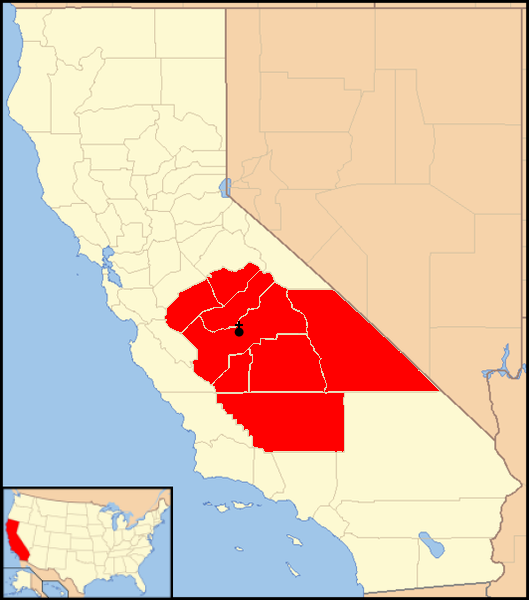
Recent developments in the Diocese of Fresno have brought attention to financial pressures affecting parishes, employees, retirees and parishioners.
What’s happening in the Diocese of Fresno
23ABC recently reported that Catholic churches in Kern County may lose millions of dollars in locally raised funds through the Diocese of Fresno’s bankruptcy proceedings. At St. Elizabeth Ann Seton Catholic Church in Bakersfield, more than $9 million that parishioners contributed toward a new church building is expected to be used in connection with the bankruptcy settlement. Other Bakersfield parishes, including Our Lady of Guadalupe, were also discussed in the reporting.

A separate financial concern has emerged involving retirement benefits. 23ABC reported that benefit accounts for current and former Diocese of Fresno employees stopped accruing benefits in June 2026, creating uncertainty for retirees and employees.
The Diocese has stated that the underfunding involves the Christian Brothers Employee Retirement Plan, that the Diocese made its required contributions in full, and that the problem was not caused by the Diocese’s pending bankruptcy. These are separate financial and legal issues with different causes, and they should be understood as such.
Together, however, these developments raise a broader question worth considering throughout the Catholic community: How can Catholic institutions develop sustainable sources of revenue while continuing to advance their mission? That is a question I have been working to address in Bakersfield.
A proposal from Bakersfield
I am the CEO of Redwood Senior Living, where we provide assisted living and senior care. Building upon our existing healthcare operations, we have begun exploring whether healthcare can provide another way to serve vulnerable populations while creating sustainable financial benefits for Catholic institutions. The initiative is led by Sir Dan Peña, and I serve as its operations lead. While our existing healthcare operations in Bakersfield provide a foundation for this work, we are in contact with Catholic institutions and locations across the United States as we explore opportunities to develop this model nationally.
I first presented this concept publicly in a Community Voices article published by The Bakersfield Californian, titled “Catholic healthcare could help strengthen Bakersfield’s parishes.”
The concept begins with two existing resources.
Catholic institutions own significant real estate. Across California and the country, this includes parish buildings, former schools, convents and other properties that may be vacant or underutilized.
At the same time, communities have an ongoing need for healthcare and supportive services for seniors and other vulnerable populations.
Why not bring those resources together?
Building upon the healthcare infrastructure we already operate in Bakersfield, we are exploring ways that appropriate Catholic properties could potentially accommodate programs such as adult day healthcare, assisted living, senior housing and other community-based healthcare services.
The objective is not to ask the Church for money.
The model we are pursuing is designed so that participating Catholic institutions would not be required to contribute capital to establish the healthcare business or assume its operating risk. Instead, outside capital and experienced healthcare operators could develop and operate the programs while creating an appropriate financial benefit for participating Catholic institutions and expanding services available to their communities.
What it would take
We are now working to determine what implementing such a program would actually require.
That includes speaking with an architect about the feasibility of utilizing an existing Catholic building for healthcare purposes and evaluating what renovations, if any, would be necessary. Issues being considered include fire sprinklers, accessibility, heating and air conditioning, building configuration, life-safety requirements and healthcare licensing standards.
This is important because converting an existing religious or educational building into a licensed healthcare facility is not simply a matter of putting a new program into an empty building. The property has to work operationally, financially and from a regulatory standpoint.
But the potential opportunity deserves serious consideration.
Part of the Church’s mission
Catholic healthcare is not a departure from the Church’s mission. Catholic religious communities have a long history of establishing hospitals, nursing facilities and charitable organizations to care for the sick, elderly, poor and vulnerable.
The question is whether that tradition can be applied in new ways to address today’s circumstances.
No single healthcare program will solve the financial challenges confronting Catholic institutions. Bankruptcy obligations, retirement benefits, aging buildings, declining enrollment and parish finances are different issues requiring different responses. But donations, grants and asset sales do not have to be the only financial tools available to Catholic institutions.
An underutilized building does not necessarily have to remain empty or eventually be sold. In appropriate circumstances, it could potentially become a place where seniors receive care, families receive support, people find employment and the Catholic institution receives an ongoing financial benefit.
That creates the possibility of accomplishing two objectives at once: advancing the Catholic mission of serving vulnerable people while strengthening the financial sustainability of the institutions carrying out that mission.
Under the leadership of Sir Dan Peña, with me serving as operations lead, our goal is to develop this initiative nationally. Our existing healthcare infrastructure in Bakersfield provides a foundation for the work, and we are in contact with Catholic institutions and locations across the United States as we explore opportunities to put underutilized Catholic properties to productive, mission-aligned use without requiring participating Catholic institutions to contribute capital or assume the operating risk of the healthcare business.
What can be built
At a time when Catholic institutions are confronting difficult decisions about their finances and properties, we should be asking not only what can be cut, closed or sold.
We should also be asking what can be built.
Healthcare may provide one answer.
— Anthony M. Barbato, CEO, Redwood Senior Living, Bakersfield
Reporting cited in this letter
Your turn
Agree? Disagree? Write a letter.
The Brief publishes signed, civil letters from Kern County readers. Responses to this piece are welcome.